How Biometric Authentication Systems Are Reshaping Security Protocols in Remote Gaming Applications
Written by Ines Schmidt · Aug 5, 2026

How Biometric Authentication Systems Are Reshaping Security Protocols in Remote Gaming Applications
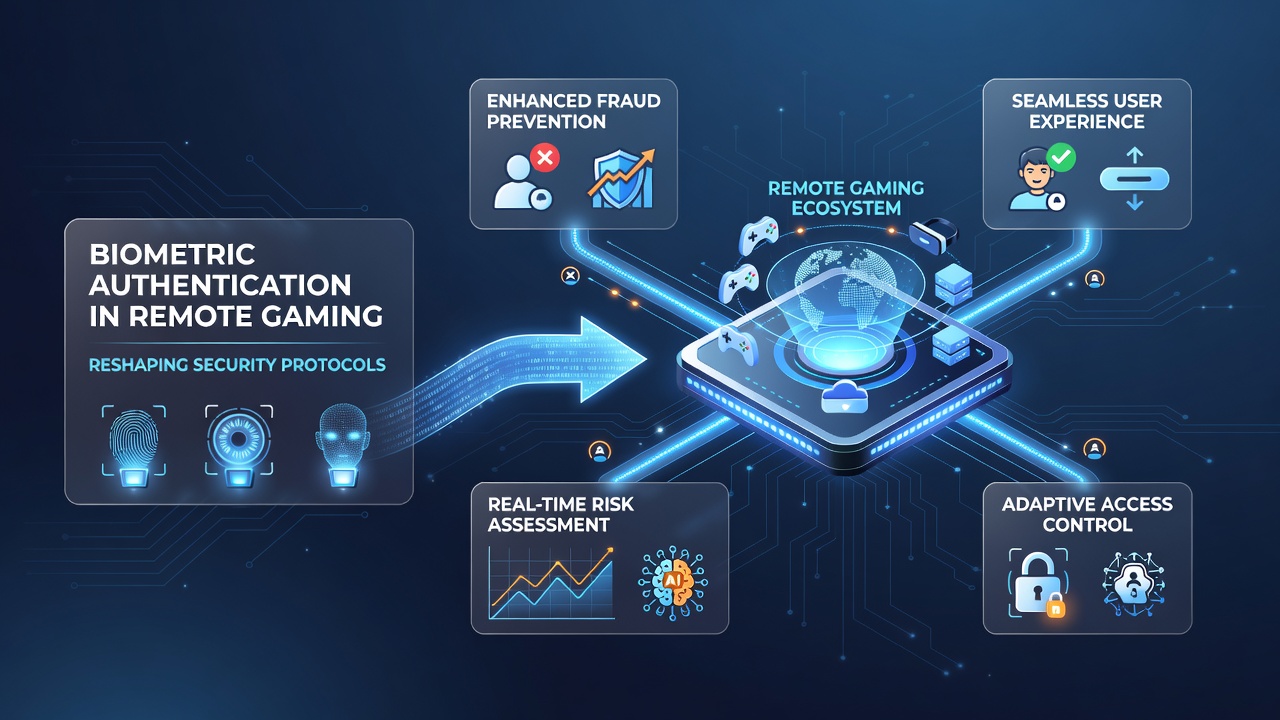
Biometric authentication has moved from niche pilots into mainstream deployment across remote gaming platforms, where operators integrate fingerprint readers, facial recognition, and voice analysis to verify user identity during login and transaction flows. These systems replace or supplement traditional passwords and one-time codes, creating layered protocols that tie access directly to physiological traits while meeting regulatory demands for player protection. Data from industry reports indicate that adoption rates climbed steadily through mid-2026, driven by the need to curb account takeover attempts and unauthorized access in jurisdictions with expanding legal markets.
Core Technologies Driving the Shift
Fingerprint sensors on smartphones combine with facial mapping algorithms that analyze depth and texture features, allowing apps to confirm identity in seconds without requiring users to recall complex credentials. Voice biometrics capture unique vocal patterns during short spoken phrases, adding another check during high-value withdrawals or account changes. Researchers at institutions such as the University of Toronto have documented how multi-modal approaches, which combine two or more biometric types, reduce false acceptance rates compared with single-factor methods alone. In August 2026 several major platforms rolled out updated versions of these tools following software patches that improved performance under varying lighting conditions and device hardware differences.
Impact on Fraud Prevention and Compliance
Account sharing and underage participation represent persistent challenges in remote gaming, yet biometric checks tie sessions to verified individuals rather than shared login details. Operators report fewer instances of credential stuffing attacks once facial or fingerprint gates replace static passwords, because stolen data loses value without the corresponding live biometric sample. Regulatory frameworks in multiple regions now encourage or mandate such measures; for example, guidance from the Malta Gaming Authority highlights biometric verification as an acceptable method for satisfying know-your-customer requirements during onboarding and ongoing monitoring. Figures from platform audits show that transaction reversal rates tied to suspected fraud dropped in markets where these protocols became standard, although operators continue to refine error-handling procedures for edge cases like worn fingerprints or temporary facial changes.
Integration Challenges and Technical Considerations
Device compatibility remains a key factor, since older hardware may lack the necessary sensors or processing power for reliable scans. Developers address this by offering fallback options that still maintain security thresholds, such as combining device-bound biometrics with behavioral analytics that track typing rhythms and navigation patterns. Privacy regulations require explicit consent and clear data-handling policies, because biometric templates are stored as encrypted mathematical representations rather than raw images. Storage practices vary, with some platforms keeping templates on-device only while others use centralized vaults protected by additional encryption layers. Observers note that cross-border data transfers introduce further complexity when users access services from different countries, prompting operators to segment their systems accordingly.
Effects on User Experience and Engagement Patterns
Players encounter faster access once initial enrollment completes, because a quick scan replaces multiple password entry steps or SMS code waits. Yet enrollment itself can take several minutes as the system captures multiple samples to build an accurate template. Studies examining user behavior after biometric rollout indicate that session lengths remain consistent while drop-off rates during login decrease, particularly among frequent users who value the reduced friction. Those who have studied these patterns across different markets point out that younger demographics adapt more quickly, whereas some older participants require clearer onboarding instructions to complete the process without assistance. The ball remains in the operators' court to balance security gains against any temporary friction introduced during the transition period.
Future Developments and Ongoing Research
Emerging approaches explore continuous authentication that monitors biometric signals throughout a session rather than only at entry points, flagging anomalies if another person takes over the device. Academic work continues on liveness detection techniques that distinguish real traits from photographs or recordings, addressing spoofing risks that could undermine the entire framework. Industry associations such as the European Gaming and Betting Association have published position papers outlining best practices for testing and auditing these systems before widespread deployment. Data shows that investment in biometric infrastructure correlates with lower compliance costs over time, since fewer manual verification interventions become necessary once automated checks reach high accuracy levels.
Conclusion
Biometric authentication continues to alter how remote gaming platforms manage identity verification and access control, shifting protocols away from knowledge-based methods toward trait-based confirmation. Implementation details differ by operator and jurisdiction, yet the underlying trend points toward tighter integration of these tools with existing fraud detection and regulatory compliance systems. As hardware capabilities advance and standards mature, the role of biometrics in maintaining secure environments for remote gaming will likely expand further.