How Sound Design Elements Shape Engagement Patterns in Digital Reel-Based Games Across Global Platforms
Written by Yara Washington · Nov 1, 2026

How Sound Design Elements Shape Engagement Patterns in Digital Reel-Based Games Across Global Platforms
Sound design in digital reel-based games operates through layered audio cues that align with reel spins, symbol alignments, and payout sequences, and operators across multiple jurisdictions track how these elements correlate with session durations and repeat visits. Data from platform analytics in November 2026 indicate that games incorporating synchronized win chimes and escalating tension tracks maintain user activity longer than those relying solely on visual feedback, while background loops calibrated to regional music preferences show measurable differences in retention rates across Asian, European, and North American markets.
Core Audio Components and Their Functional Roles
Reel games deploy distinct sound categories including ambient loops, spin initiators, symbol landing tones, and victory fanfares, each timed to specific mechanical events within teh game engine. Researchers at the University of Nevada Reno have documented that high-frequency click sounds during reel deceleration increase perceived responsiveness, whereas low-frequency rumbles during bonus round entries correlate with extended play sequences in controlled testing environments. These patterns hold across both mobile and desktop deployments, though mobile users encounter compressed audio files that alter timbre and impact engagement differently than desktop versions with full dynamic range.
Platforms serving multiple territories adjust audio parameters to match local expectations, for instance deploying brighter, faster percussion in markets where players favor high-tempo tracks while softening attack times in regions preferring restrained audio profiles. Operators report that such customizations reduce early session exits, particularly when combined with volume normalization features that prevent abrupt shifts between quiet base-game audio and louder feature activations.
Platform-Specific Implementation Across Global Markets
Mobile applications often prioritize lightweight audio assets to accommodate variable network conditions, resulting in shorter loop cycles that repeat more frequently during extended sessions. Desktop and console versions, by contrast, utilize longer ambient compositions and positional audio that respond to player head movement in virtual reality adaptations. Figures released by the Canadian Gaming Association in late 2026 reveal that cross-platform titles maintaining consistent sound libraries across devices achieve higher daily active user counts than those with fragmented audio experiences.
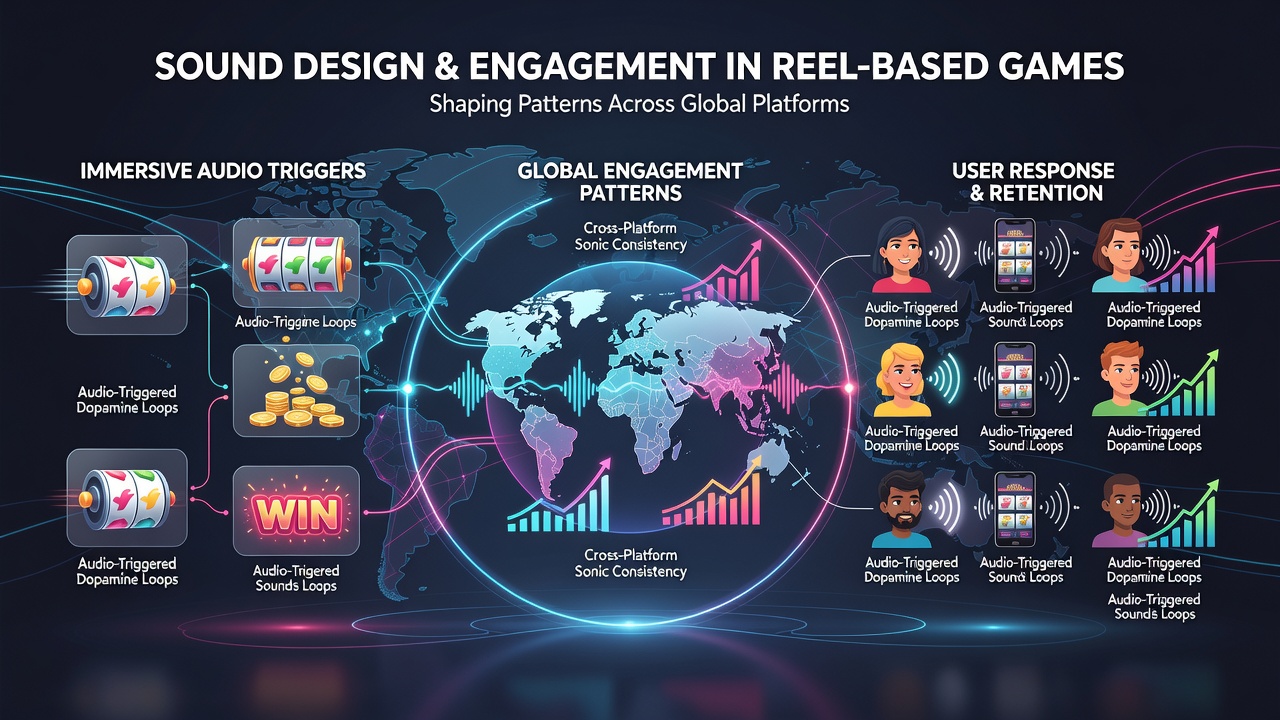
European operators have implemented adaptive mixing systems that lower background music during regulatory-mandated information displays, preserving clarity while sustaining atmospheric continuity. In contrast, platforms popular in Latin American territories frequently layer celebratory vocal samples over win sequences, aligning with cultural preferences for expressive audio feedback. These regional adaptations appear in aggregated telemetry that shows distinct engagement curves, with vocal-heavy designs producing sharper spikes in activity immediately following payout events.
Measurement of Engagement Through Audio Analytics
Telemetry systems record precise timestamps for every audio trigger, allowing operators to map correlations between specific sound events and metrics such as spin velocity, feature activation frequency, and session length. One study released by the Australian Gambling Research Centre examined over two million sessions and found that games introducing new audio layers during progressive meter climbs retained users through more consecutive spins than comparable titles without such layering. The same analysis noted that abrupt silence following near-miss outcomes produced quicker session terminations across tested cohorts.
Regulatory frameworks in several jurisdictions now require disclosure of audio parameters alongside visual mechanics, prompting developers to document how sound files interact with random number generators and payout tables. This transparency supports comparative studies that isolate audio as a variable while holding visual and mathematical components constant, revealing consistent patterns in how certain frequency ranges sustain attention during base game segments versus bonus rounds.
Conclusion
Sound design elements in digital reel-based games continue to influence engagement patterns through precise alignment with mechanical events and adaptation to platform and regional requirements. Data collected through November 2026 demonstrate that layered audio cues, when calibrated consistently across devices and markets, correspond wth measurable differences in session metrics and user return rates. Operators and developers apply these findings through iterative testing that refines timing, frequency response, and cultural resonance while maintaining compliance with evolving technical standards.